
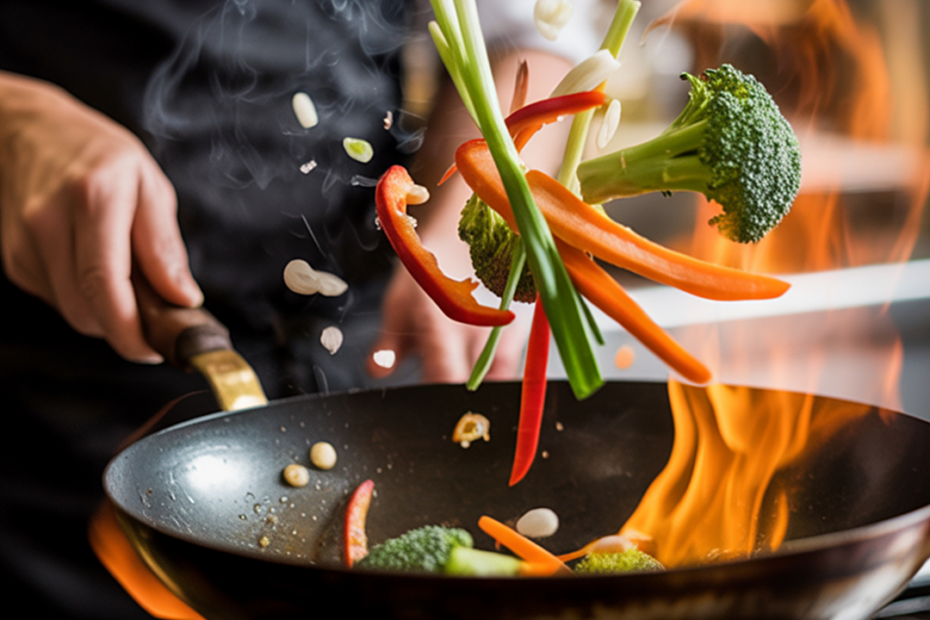
Ordering out can fit into a balanced lifestyle when you know how to read a menu and make small, strategic adjustments. Use this guide to choose a satisfying starter, ask for simple preparation changes, and recognize menu terms that usually signal lighter, richer, or harder-to-judge options.
Start light. If you’d like to order something while waiting for your entrée, start with a garden salad with light dressing on the side, a broth-based soup, or a lean-protein appetizer like shrimp cocktail. Beginning with a lighter choice can take the edge off your hunger and help you feel more satisfied before your entrée arrives. Skip fried tortilla chips, which can add hundreds of calories to a meal. If bread is hard to resist or you prefer to avoid it, ask if the breadbasket be left off the table or move it out of easy reach.
Ask questions and special-order politely. If the menu description is unclear, ask how the dish is prepared. Request “easy on the oil” or no butter, ask for sauces on the side, choose lighter flavor boosters like salsa or lemon wedges, and swap a starchy side for extra vegetables when you can.
Learn common menu terminology. Some words usually point to lighter choices, while others often signal richer, higher-calorie preparations. Use the guide below to spot terms that usually suggest lighter options, terms that deserve more caution and terms that are worth asking about before you order. These terms are a quick decision tool, not a strict rulebook. Preparation methods can vary by restaurant, so when a dish sounds appealing, but the wording is unclear, ask how it is made and request simple adjustments when needed.
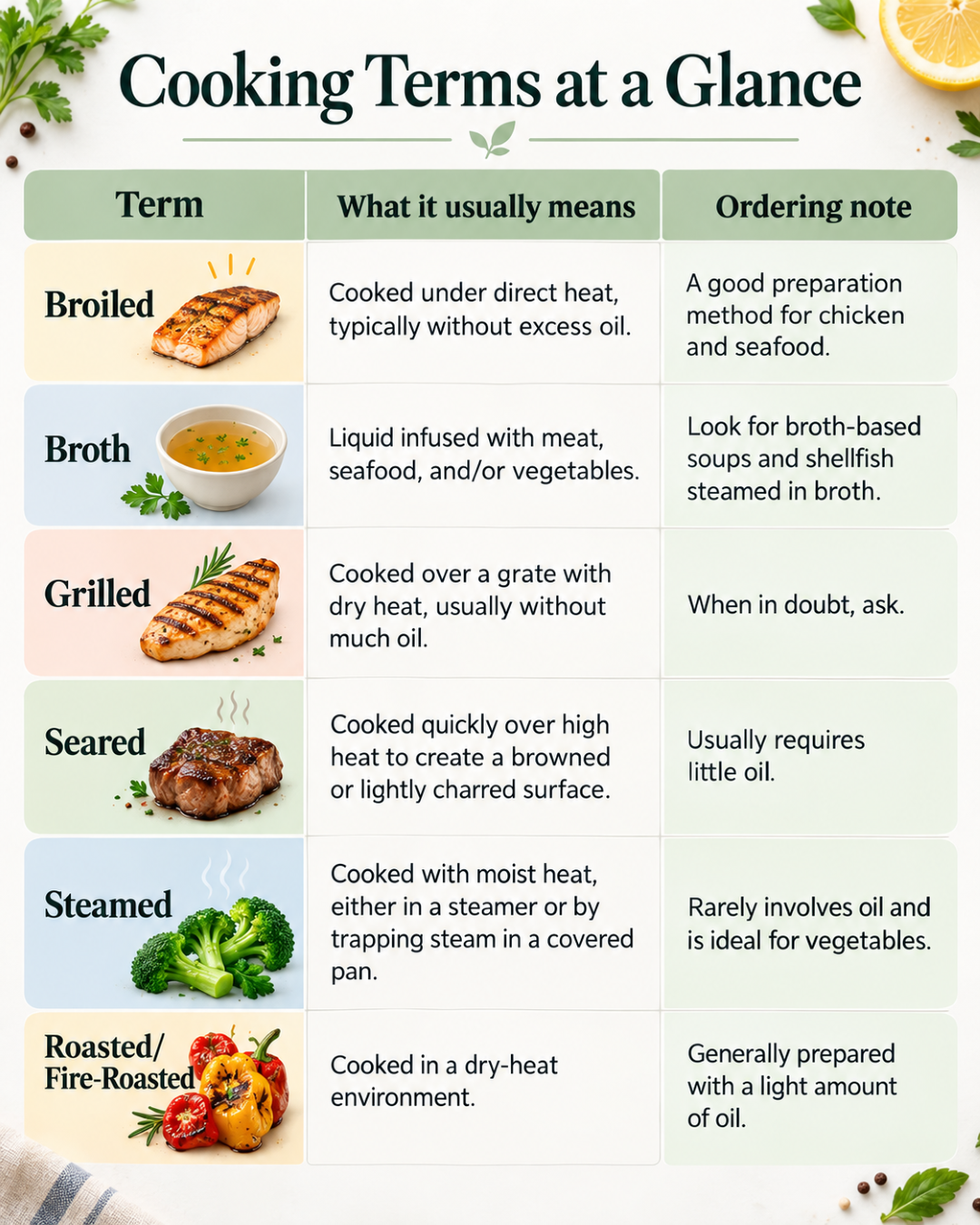
Menu Terms to Choose
These terms usually point to simpler cooking methods that rely on heat, steam, broth, or light amounts of oil rather than heavy sauces. They are often good starting points when you want a lighter entrée or side.
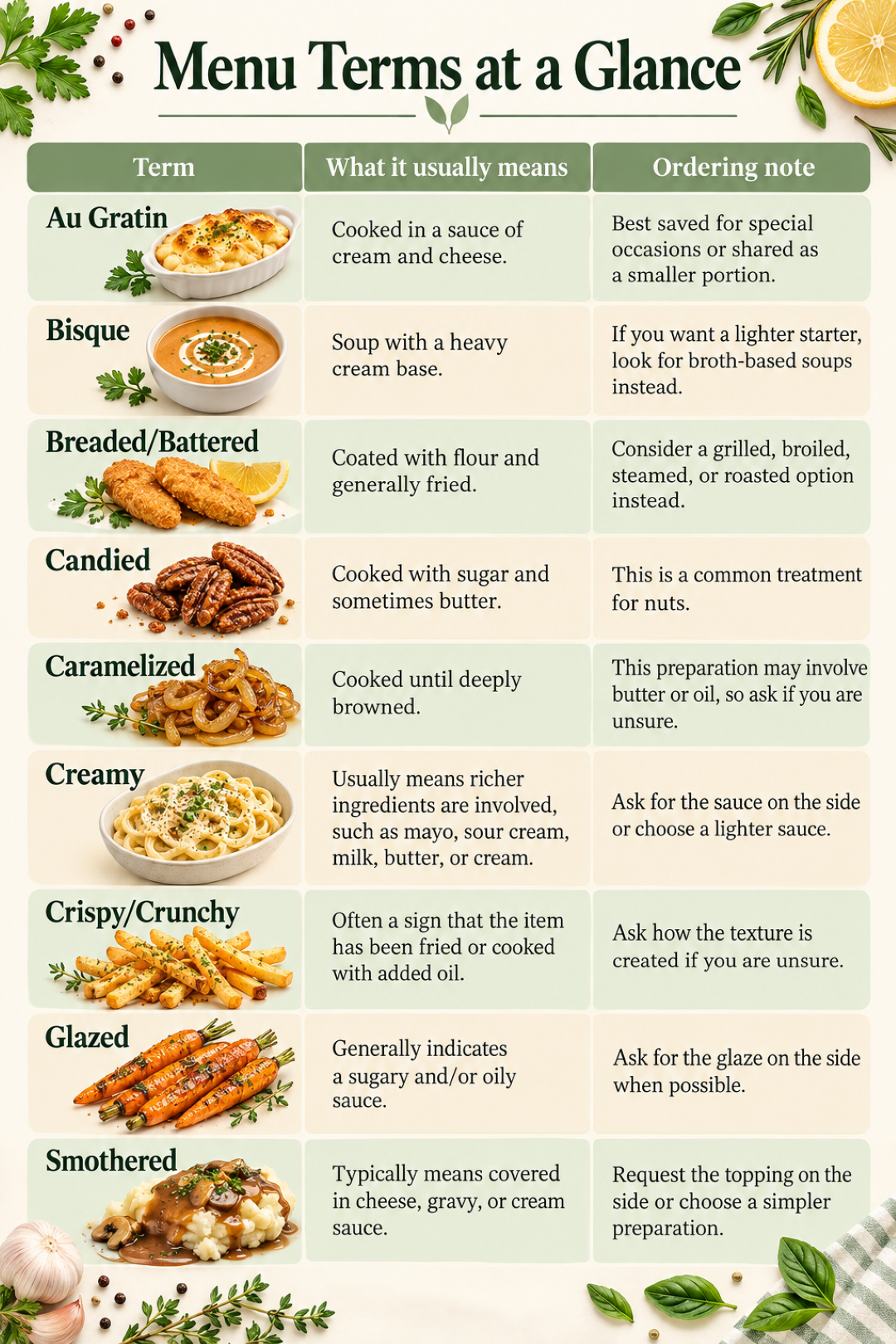
Menu Terms to Avoid
These terms often signal richer preparations that may include cream, cheese, sugar, heavy sauces, frying or added oil. They are not off-limits, but they are worth ordering thoughtfully, modifying, sharing or saving for occasions when they fit your goals.
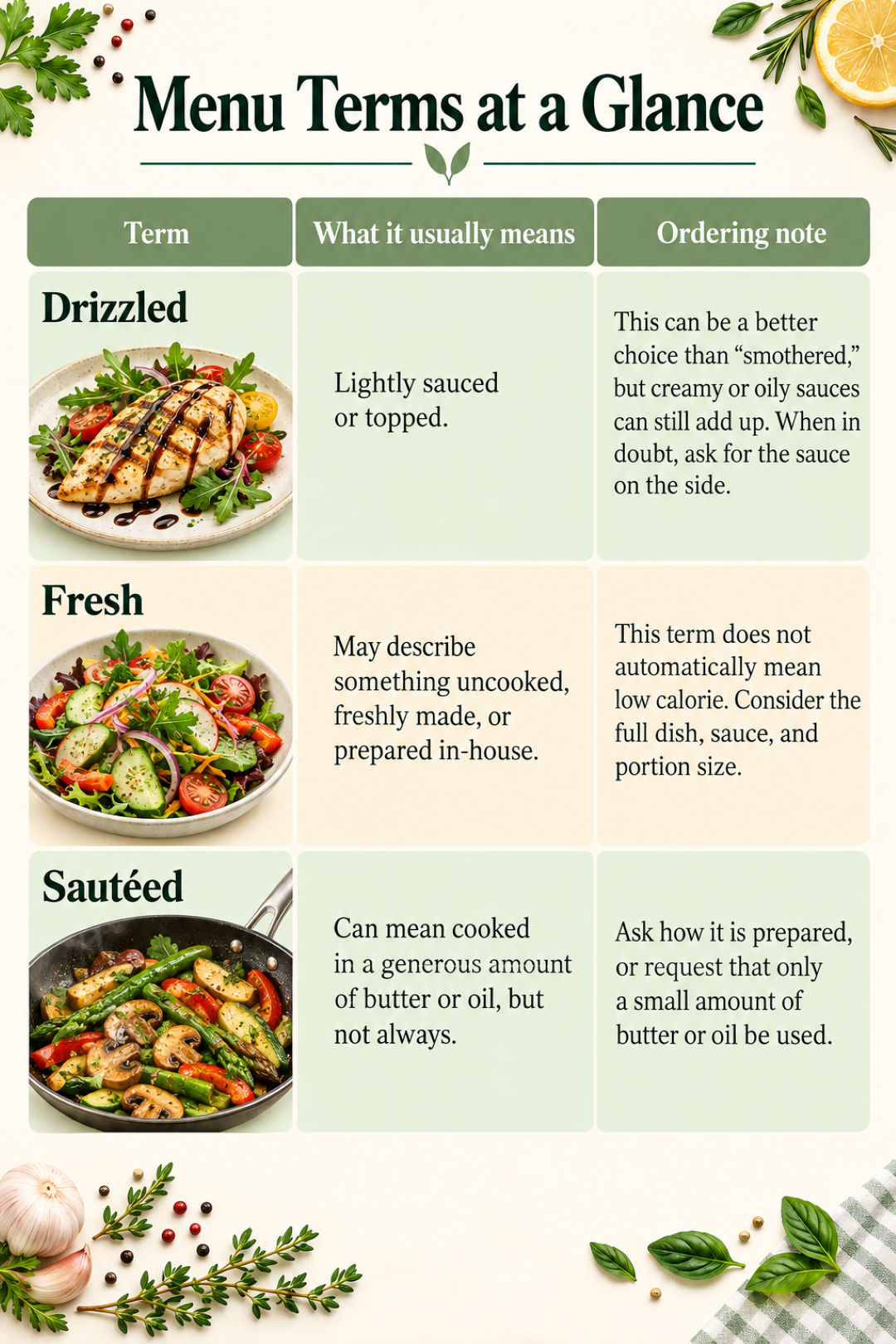
Wild Cards on the Menu
These terms depend heavily on how the kitchen prepares the dish. Treat them as cues to ask a quick question, request sauce or oil on the side, and consider the overall dish rather than relying on the menu word alone.
Dining out does not have to be all-or-nothing; with a few thoughtful questions, simple swaps, and a better understanding of menu language, you can enjoy restaurant meals while still making choices that support your health goals.
Content submitted by Janyce Gately MS, RD, LDN, CHC
For more support with building healthy eating habits, our Registered Dietitian, Janyce, is here to provide personalized guidance and support every step of the way.